Granada, Nicaragua: Family Travel Guide to the Colonial City, Masaya & Laguna de Apoyo
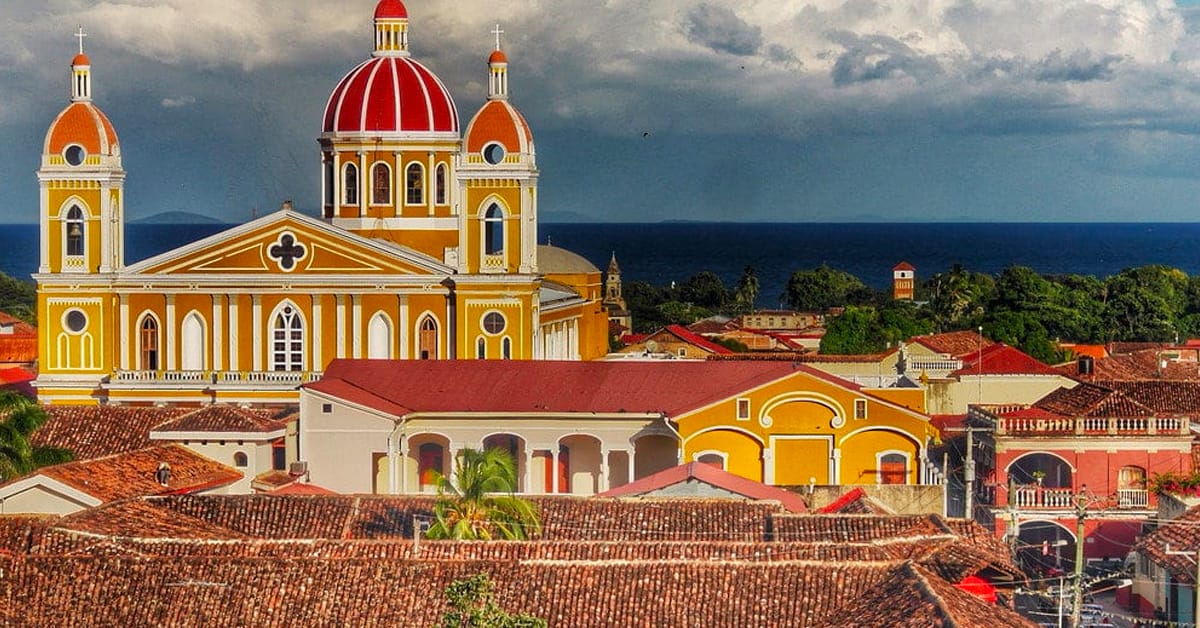
Granada is Nicaragua’s colourful colonial city on the shore of Lake Nicaragua, founded in 1524 and one of the oldest cities founded by Europeans in the Americas. Add the islets on the lake, a volcano where you can look into an active crater, and a warm crater lake that’s perfect for swimming, and it’s the best place to spend a few days away from the beach. It’s also an easy add-on to a beach stay in San Juan del Sur or Tola.
Last checked September 2026. Prices, opening hours and tour details change often in Nicaragua, so treat the numbers here as a guide and confirm before you go. Full disclosure: we’re a vacation rental and trip-planning team based in Tola, and we’re part of the same local group as Nicaragua Surf Camp, Magnific Rock, Esc – Digital Nomad Village, Emerald Real Estate and Emerald Investment, so we link to them where they’re useful.
Best for: culture, history and easy day trips, as a break of 2 to 3 nights from the beach
Things to do in Granada
Granada’s centre is compact and flat, so most sights are a short walk from the main square, Parque Central. It’s hot in the middle of the day, so plan walking for the morning and late afternoon.
What
Cost (approx.)
Time needed
Good for kids?
Cathedral of Granada and Parque Central
Free
30 minutes
Yes
La Merced church bell tower (best view of the city)
$1
30 minutes
Older kids; the spiral stairs are narrow
Calle La Calzada (pedestrian street)
Free
1 to 2 hours
Yes, especially before about 8 pm
Convento San Francisco museum
About $2
1 hour
Yes, for curious kids
Fortaleza La Pólvora (old fort with city views)
Free
1 hour
Yes
ChocoMuseo bean-to-bar chocolate workshop
$25 adults, $20 under 12
2 hours
A family favourite
Horse-carriage tour from Parque Central
From about $35 for a longer private tour
45 minutes to 3 hours
Yes
Isletas boat tour
About $30 per person
2 to 2.5 hours
Yes
Cathedral and Parque Central: the bright yellow cathedral faces the main square, where you’ll find shade trees, snack stalls and the horse carriages. It’s the natural starting point for any walk.
La Merced bell tower: climb the tower for the classic photo over the red-tiled roofs, the cathedral and Mombacho Volcano. It’s open until about 5:30 pm, and sunset light is the best.
Calle La Calzada: the pedestrian street running from the cathedral towards the lake, lined with restaurants, ice cream and street performers. It’s lively and fun with kids early in the evening and gets louder later.
Convento San Francisco: a historic convent that’s now a museum. The highlight is a collection of basalt statues carved on Zapatera Island between about 800 and 1200 AD.
ChocoMuseo: kids make their own chocolate from the cacao bean up. Workshops run daily at 9 am, 11 am, 2 pm and 4 pm, and they’re a good way to escape the midday heat.
Doña Elba Cigars: a family cigar factory a block south of the Xalteva church, where you can watch cigars being rolled and roll your own. Kids can watch, but tasting is for adults only.
Cooking classes and Spanish lessons: Granada has several Spanish schools and small cooking schools if you’re staying a week or more.
Granada’s history is a big part of the fun. Pirates attacked the city several times from the lake, and in 1856 the American adventurer William Walker’s men burned much of it. Most of what you see today was rebuilt afterwards.
Las Isletas de Granada
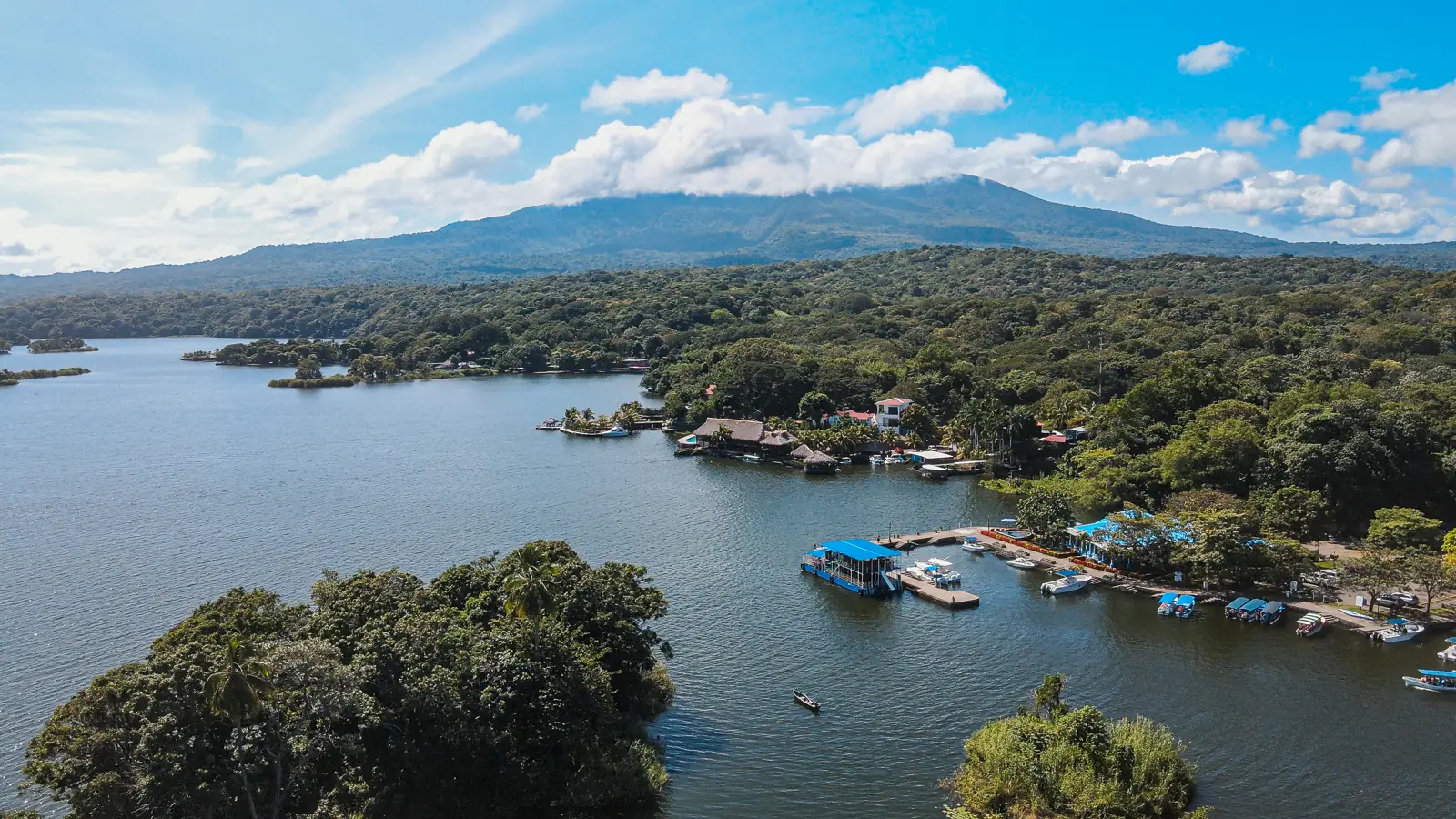
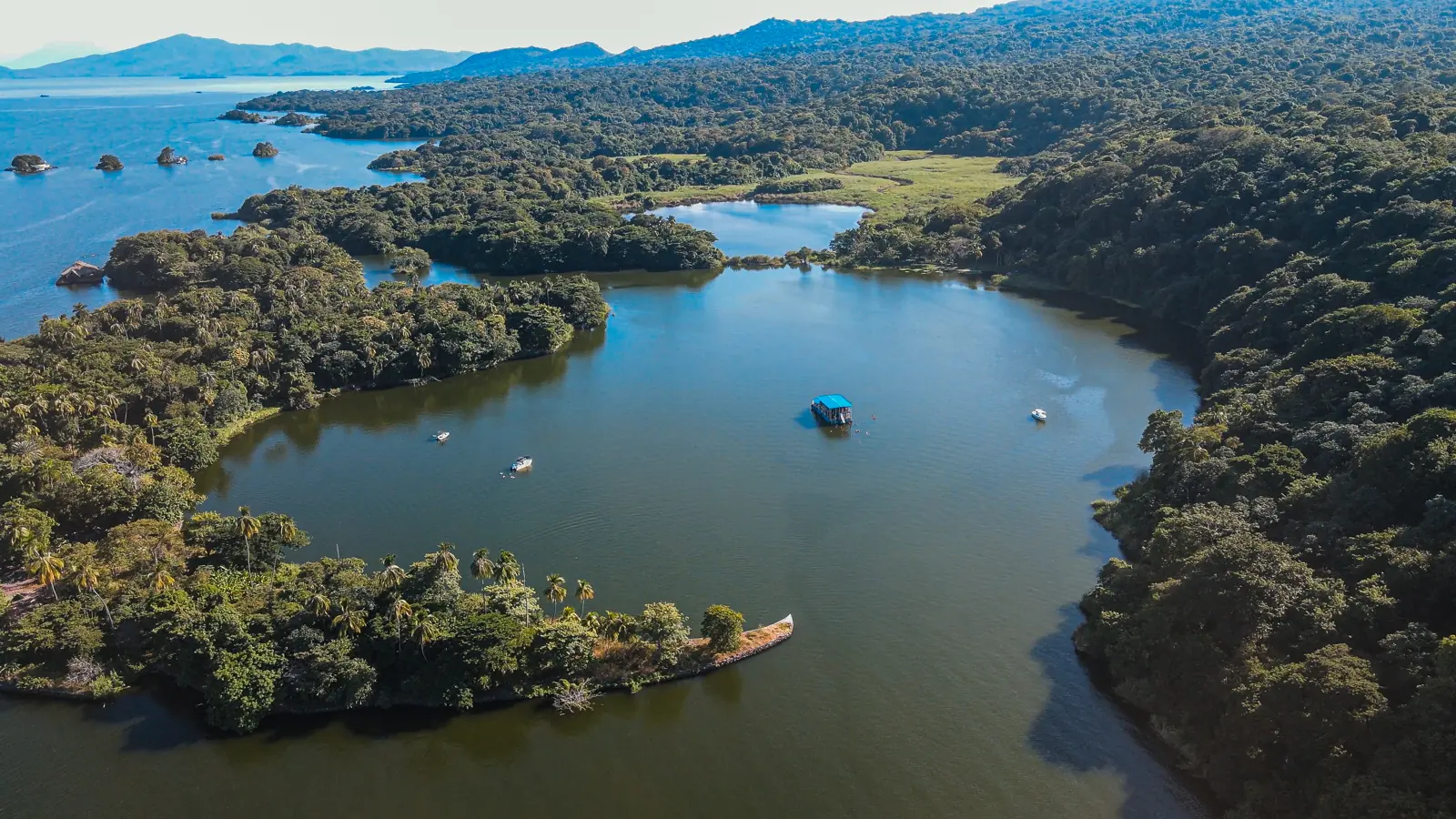
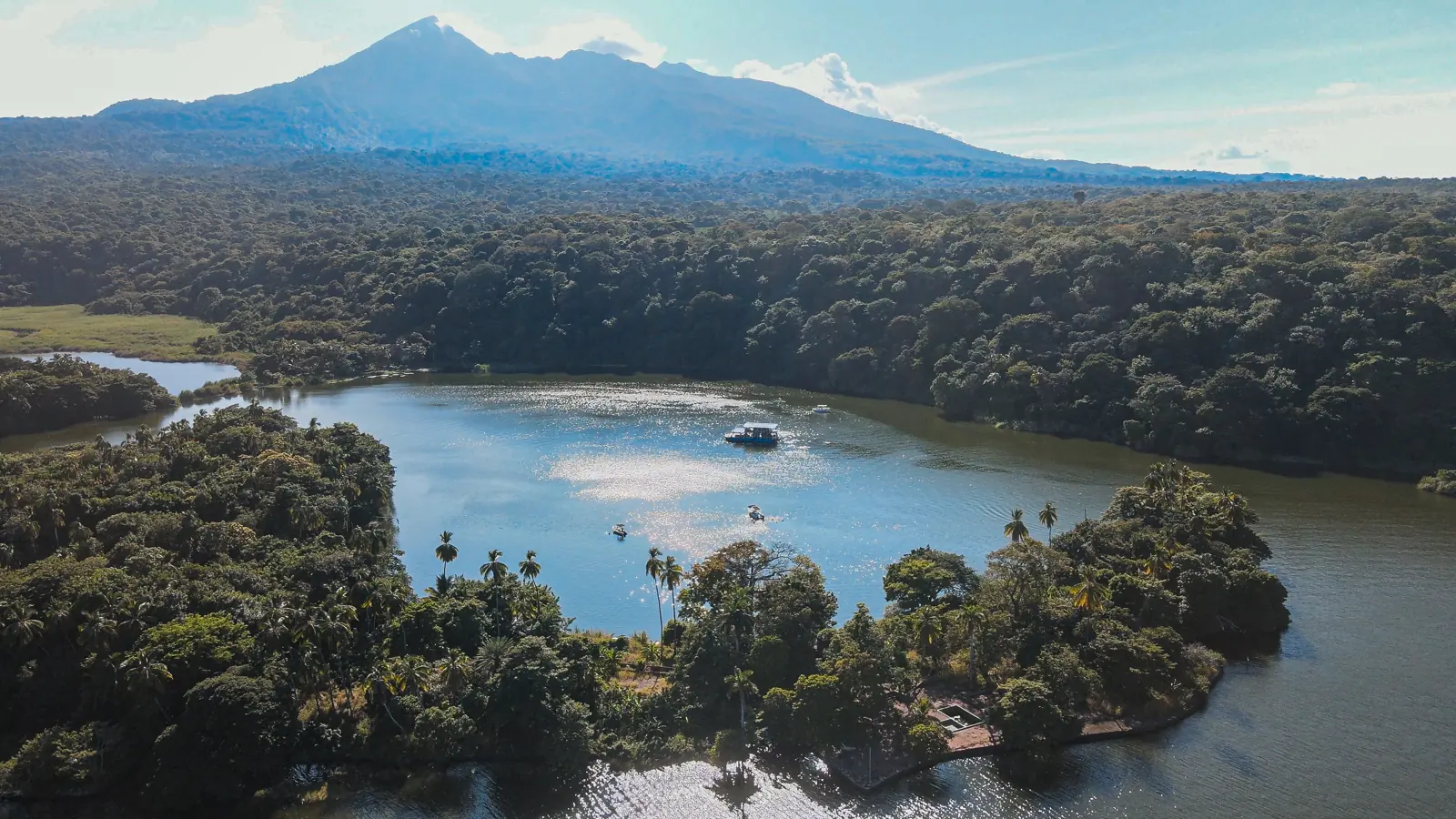
Just south of the city, around 365 small islands sit in Lake Nicaragua, formed by an ancient eruption of Mombacho Volcano. About 1,200 people live on them, alongside herons, cormorants and iguanas.
The Isletas from the air, with Mombacho Volcano behind.
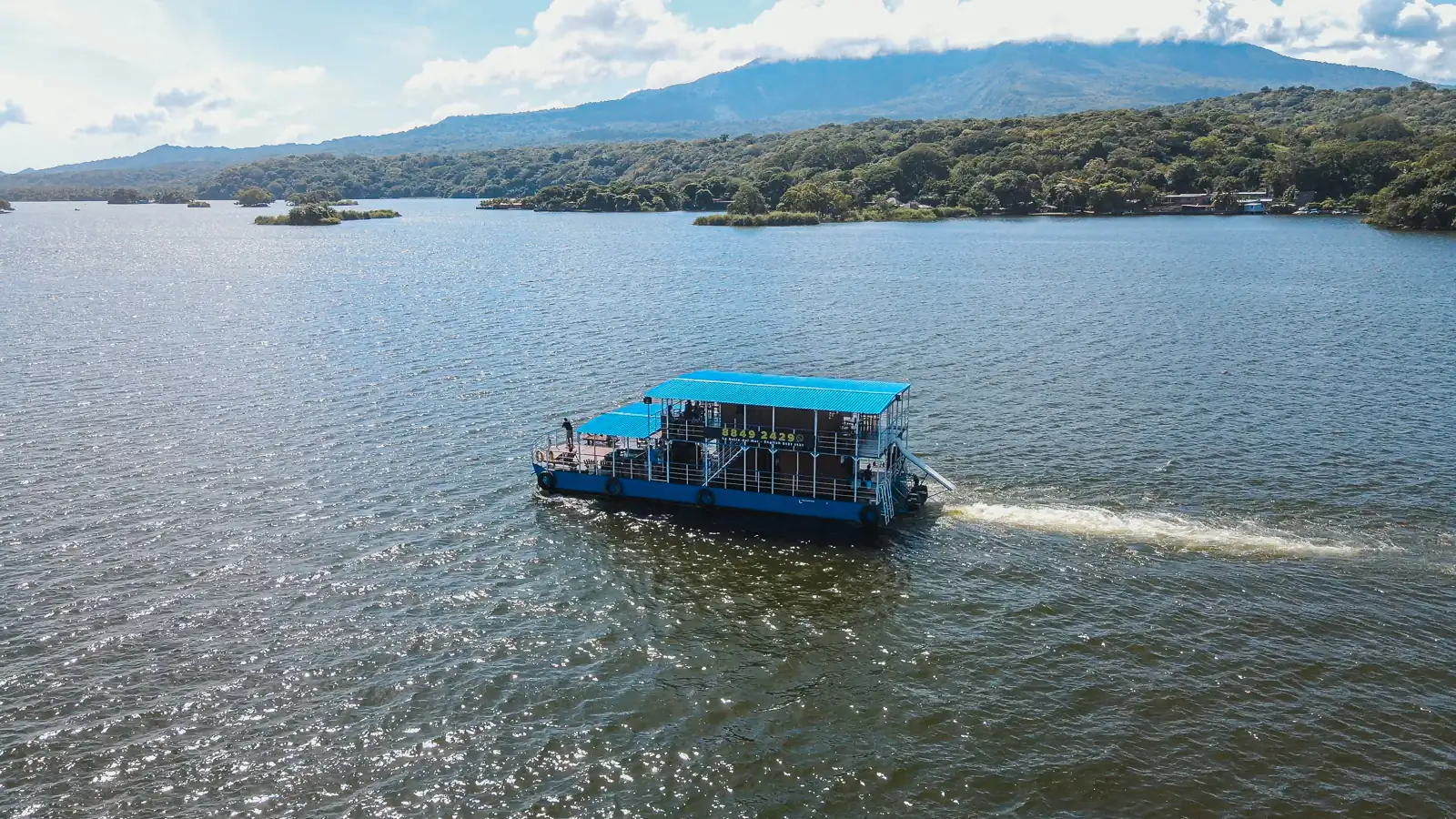
How it works: boats leave from Puerto Asese, a short drive south of the centre. A typical tour lasts 2 to 2.5 hours and stops at the Spanish fort of San Pablo, built in 1784, and passes “Monkey Island”.
Cost: about $30 per person on a private tour booked through a local operator in 2026, or less if you share a boat. Guided kayak tours cost about $39 per person.
Best time: late afternoon, when it’s cooler and the light over the lake is beautiful.
With kids: enjoy the monkeys from the boat. Don’t let children feed or touch them, as visitors have been bitten.
Boat tours leave from Puerto Asese.Quiet channels between the islets.
Masaya Volcano and Masaya town
Masaya Volcano National Park
Masaya is one of the few places in the world where you can drive right up to the rim of an active crater. The park entrance is on the Managua to Masaya highway, about 30 to 45 minutes from Granada, and a paved road climbs 5 km to the crater car park.
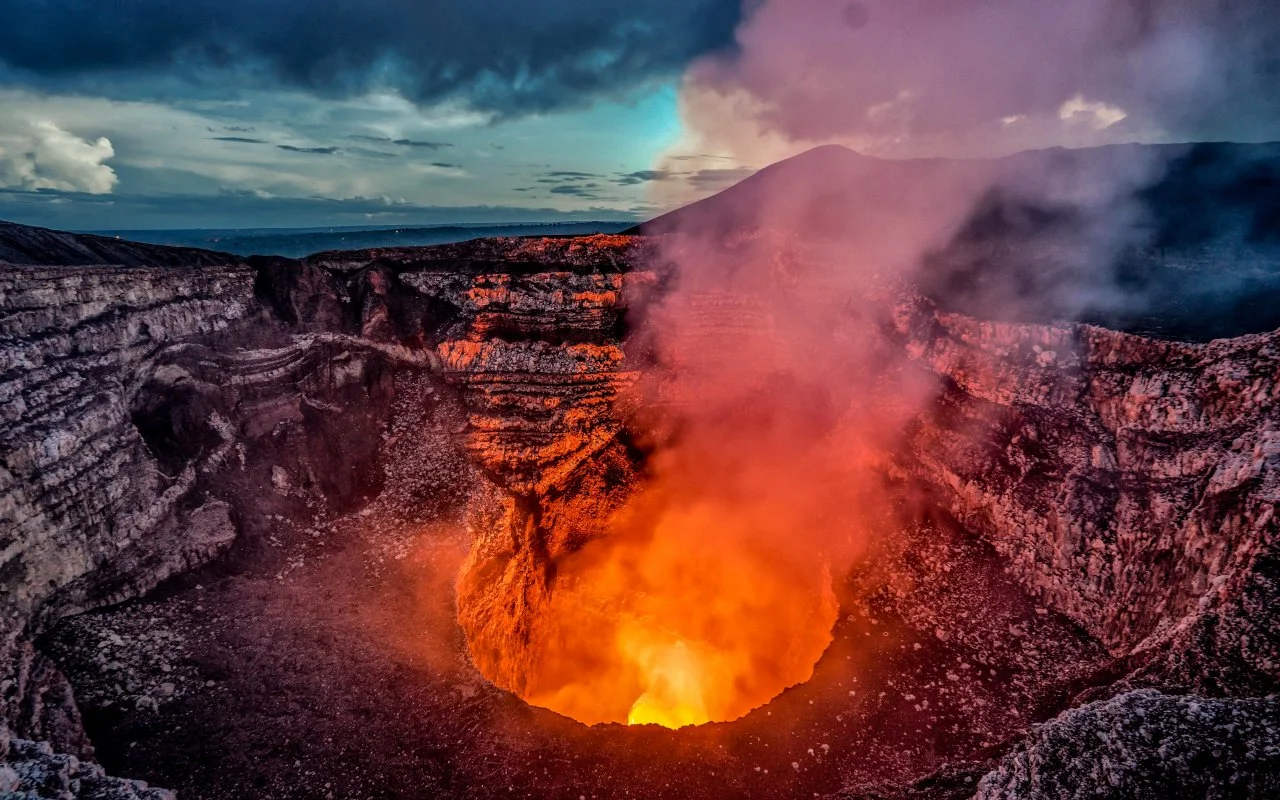
Glowing lava in the Santiago crater of Masaya Volcano.
Night visits are the highlight. The evening slot starts at about 4:30 to 5 pm and costs foreign visitors about $10. After dark you can see the glowing lava in the crater. How much you see changes from night to night with the gas and the volcano’s activity.
Day visits cost about $4 to $5 and include the visitor centre and trails, but lava is rarely visible in daylight.
Time at the rim can be short. On busy nights rangers may limit you to a few minutes at the viewpoint, and it can get crowded, so hold on to little ones.
Tours: a shared night tour from Granada costs about $25 to $30 per person, and private tours with entry included run about $30 to $45 per person.
Masaya town and the Pueblos Blancos
Masaya Artisans’ Market: the old market in the centre of Masaya is open daily from about 8 am to 5 pm and is one of the best places in the country for hammocks, pottery, wood carvings, textiles and toys.
Coyotepe fortress: a hilltop fort built in 1893 on the edge of Masaya, later used as a prison, with views over the town.
Catarina and San Juan de Oriente: two of the “Pueblos Blancos” (white villages) in the hills between Masaya and Granada. Catarina’s lookout gives a famous view down into Laguna de Apoyo, and San Juan de Oriente is known for its pottery workshops.
Most visitors stay in Granada or at Laguna de Apoyo and visit Masaya on a half-day or evening trip.
Laguna de Apoyo
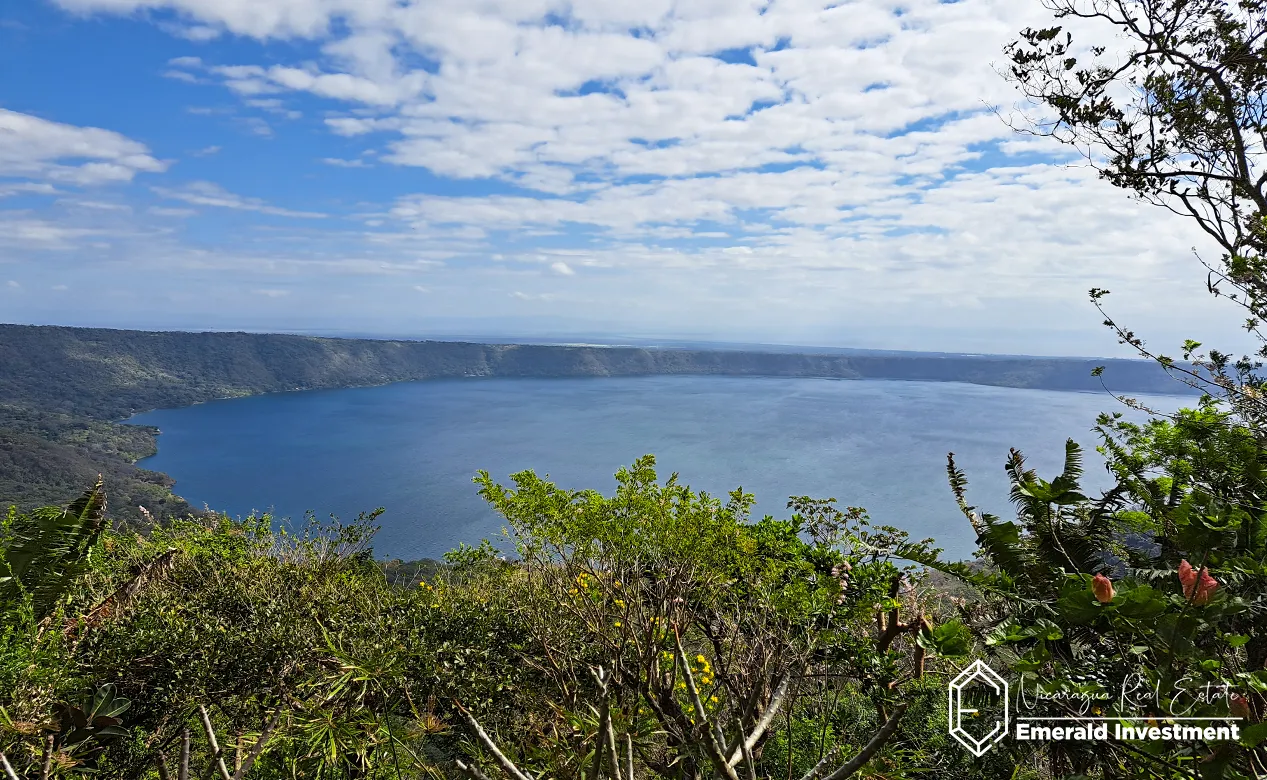
Laguna de Apoyo is a volcanic crater lake about 30 minutes from Granada, and it’s one of the nicest places to swim in Nicaragua. The crater formed around 23,000 years ago, the lake is about 6.6 km across and roughly 175 m deep, and it has been a nature reserve since 1991. Motorboats aren’t allowed, so the water is calm and quiet.
Laguna de Apoyo, a warm crater lake about 30 minutes from Granada.
Swimming: the water is warm, around 27 to 28°C, and clean enough for swimming.
Day passes: lodges on the shore sell day passes of about $5 to $9 per person, which usually include loungers and a restaurant. Laguna Beach Club charges $6 plus tax for adults and $3.50 for children under 12, including kayaks, paddleboards, life jackets and a floating platform.
Getting there: the road down the crater wall is steep. Some lodges run shuttles from Granada, or we can arrange a driver.
Stay the night: sunrise over the crater is special, and staying avoids the drive back in the dark. See where to stay at Laguna de Apoyo.
Mombacho Volcano
Mombacho is the volcano that towers over Granada. Its upper slopes are a cloud-forest nature reserve with trails around small craters and fumaroles, and views over the lake and the Isletas.
Mombacho Volcano, the cloud-forest giant next to Granada.
Getting up: visitors ride the reserve’s 4×4 shuttle to the top. It cost about $24 per person plus a trail fee in 2025, and it runs in set departure windows.
Trails: the 1.5 km Crater Trail takes about 1.5 hours and doesn’t need a guide. The longer Tigrillo (2.5 km) and Puma (4 km, about 4 hours) trails are guided.
Zip-line: Canopy Miravalle on the lower slopes has 11 lines, 17 platforms and 2 bridges, about 90 minutes, for about $29 per person.
Check before you go: shuttle times and fees change, so phone the reserve or ask us to book. The trails aren’t suitable for strollers.
More day trips from Granada
Ometepe Island: the twin-volcano island in Lake Nicaragua. Most people drive south to San Jorge, near Rivas, and take the ferry to Moyogalpa, which takes about an hour. The old direct lake ferry from Granada was suspended in 2023 when the lake level was low. Ometepe is best as an overnight trip with kids.
The beaches: San Juan del Sur is about 1.5 hours away and the Emerald Coast around Tola and Popoyo about 1.5 to 2 hours. See our San Juan del Sur guide and our Popoyo and Tola guide.
Want to see more of the country? Our sister company Nicaragua Surf Camp has an honest overview of the best things to do in Nicaragua, including Granada, the Isletas, Apoyo, Masaya and Ometepe.
Granada with kids
Beat the heat: Granada is hot, with little breeze, and April is the hottest month. Families say a place with a pool makes the biggest difference. Sightsee early, rest at midday and head out again in the late afternoon.
Bring a carrier, not a stroller: pavements are narrow and uneven, and cobbled streets are hard work with wheels.
Kid favourites: the ChocoMuseo workshop, a horse-carriage ride, the Isletas by boat, La Merced bell tower for older kids, and a swim day at Laguna de Apoyo.
Eating out: there are plenty of relaxed restaurants around Parque Central and La Calzada, and simple Nicaraguan food like grilled chicken, rice and beans and fried plantains goes down well with kids.
Healthcare: Granada’s public hospital is Hospital Amistad Japón on the Carretera Granada. For serious care, the main private hospital is Hospital Vivian Pellas on the Masaya highway on the Managua side. The US advises that comprehensive care is only available in Managua, so bring travel insurance that covers medical evacuation.
How many days do you need in Granada?
2 nights: day one for the city (cathedral, La Merced tower, ChocoMuseo, La Calzada) and an afternoon Isletas boat trip. Day two for Laguna de Apoyo, with an evening trip to Masaya Volcano.
3 nights: add Mombacho or the Masaya market and Pueblos Blancos, at a slower pace with more pool time.
With the beach: a popular 10 to 14-day family trip is 2 to 3 nights in Granada and 6 to 10 nights on the coast. Fly into Managua, start in Granada, then drive to the beach to finish the trip relaxed.
Comparing Nicaragua with its neighbour? Our Nicaragua vs Costa Rica guide includes a two-country route that ends in Granada.
When to go to Granada
Months
Weather
Keep in mind
December to February
Dry and a little less hot
Peak season, so book early for Christmas and New Year
March and April
Dry and hottest; April averages highs of about 33°C
Semana Santa (21 to 28 March 2027) is very busy
May to August
Green season, with afternoon showers
Quieter and cheaper; big fiestas in August
September and October
Wettest months; October is the rainiest
Fewest visitors; some tours may be affected by rain
November
Rain easing
Green, quiet and good value
Festivals
Semana Santa (Holy Week): processions through the city, including Stations of the Cross on the lake.
Fiestas de la Asunción (August): in 2026 these included the Tope de Toros bull run, a horse parade with more than 4,000 riders (the Desfile Hípico) and a carnival.
La Purísima and La Gritería (7 and 8 December): altars to the Virgin Mary in homes and streets, with singing and treats handed out, which kids love.
Granada’s International Poetry Festival, which some older guides still mention, no longer takes place.
Where to stay in Granada
Historic centre: the most walkable area and the one most visitors choose, close to Parque Central and La Calzada. It’s lively in the evenings, so pick a house a few blocks from La Calzada if you want quiet nights.
Colonial homes: many rentals are traditional houses built around a central courtyard, often with a small pool, high ceilings and air-conditioned bedrooms. With kids, a pool is well worth it.
Laguna de Apoyo: lakeside lodges and homes about 30 minutes away, for swimming and nature.
Las Isletas: island stays are the most secluded and usually the most expensive option.
The airport is about 42 km from Granada, roughly 45 minutes by car. A taxi costs about $55 to $70 and shuttles about $50 to $80. A private transfer is easiest with kids and luggage, and we can arrange one with car seats.
From San Juan del Sur, Tola or Popoyo
San Juan del Sur is about 1.5 hours by car, and shared shuttles run for about $39 per person. From Tola and Popoyo, allow roughly 1.5 to 2 hours. Buses are possible via Rivas but slow, with a change.
From Liberia, Costa Rica (LIR)
It’s about 180 km, roughly 3 hours of driving plus the Peñas Blancas border crossing. Shared shuttles cost about $80 per person and take around 5 hours. Costa Rican rental cars can’t cross the border.
Getting around
The centre is walkable. For anything further, use authorised taxis with red plates, check the driver’s ID and don’t take a taxi a stranger has called for you. Avoid driving between towns after dark. For the full picture on flights and the border, see how to get to Nicaragua’s southern coast.
Everyday crime: pickpocketing and bag snatching happen in tourist areas. Keep phones out of sight on busy streets and at the market.
Rules visitors don’t expect: drones are banned, and you shouldn’t photograph police or government buildings.
Money: US dollars are widely accepted, and the córdoba is fixed at about 36.62 to the dollar in 2026. Carry small bills for taxis, carriages and markets.
Health: don’t drink the tap water, and use mosquito repellent, as dengue, chikungunya and Zika are present.
Phone: Claro and Tigo SIM cards are cheap and easy to buy, and Tigo has the widest coverage.
Yes, for 2 to 3 nights. Kids usually love the horse carriages, the chocolate workshop, the Isletas boat trip and swimming at Laguna de Apoyo. Choose a place with a pool and avoid sightseeing in the midday heat.
Is Granada safe for tourists?
Granada is one of Nicaragua’s most visited cities, and the historic centre is busy with visitors. The main day-to-day risk is petty theft. The US rates the whole country Level 3, mainly for political reasons, so read the advisories before you decide.
Can you see lava at Masaya Volcano?
Yes. In October 2026 our team reports lava visible in the crater, and night visits are the best time to see it. How much you see varies from night to night, so check conditions on the day.
Can you swim in Laguna de Apoyo?
Yes. The water is warm and calm, motorboats aren’t allowed, and lodges on the shore sell day passes with kayaks and life jackets.
How far is Granada from the beach?
About 1.5 hours to San Juan del Sur and roughly 1.5 to 2 hours to Tola and Popoyo by car.
What’s the best time to visit Granada?
December to April is dry, with December to February a little cooler. September and October are the wettest months but the quietest.
Plan your Granada trip
Tell us your dates, who’s coming and how you’d like to split your time between Granada and the beach. We’ll send back homes, transfers and family-friendly tours that fit. Start planning or WhatsApp us at +505 8916 6916.
Manage Cookie Consent
To provide the best experiences, we use technologies like cookies to store and/or access device information. Consenting to these technologies will allow us to process data such as browsing behavior or unique IDs on this site. Not consenting or withdrawing consent, may adversely affect certain features and functions.
Functional
Always active
The technical storage or access is strictly necessary for the legitimate purpose of enabling the use of a specific service explicitly requested by the subscriber or user, or for the sole purpose of carrying out the transmission of a communication over an electronic communications network.
Preferences
The technical storage or access is necessary for the legitimate purpose of storing preferences that are not requested by the subscriber or user.
Statistics
The technical storage or access that is used exclusively for statistical purposes.The technical storage or access that is used exclusively for anonymous statistical purposes. Without a subpoena, voluntary compliance on the part of your Internet Service Provider, or additional records from a third party, information stored or retrieved for this purpose alone cannot usually be used to identify you.
Marketing
The technical storage or access is required to create user profiles to send advertising, or to track the user on a website or across several websites for similar marketing purposes.
To provide the best experiences, we use technologies like cookies to store and/or access device information. Consenting to these technologies will allow us to process data such as browsing behavior or unique IDs on this site. Not consenting or withdrawing consent, may adversely affect certain features and functions.
Functional
Always active
The technical storage or access is strictly necessary for the legitimate purpose of enabling the use of a specific service explicitly requested by the subscriber or user, or for the sole purpose of carrying out the transmission of a communication over an electronic communications network.
Preferences
The technical storage or access is necessary for the legitimate purpose of storing preferences that are not requested by the subscriber or user.
Statistics
The technical storage or access that is used exclusively for statistical purposes.The technical storage or access that is used exclusively for anonymous statistical purposes. Without a subpoena, voluntary compliance on the part of your Internet Service Provider, or additional records from a third party, information stored or retrieved for this purpose alone cannot usually be used to identify you.
Marketing
The technical storage or access is required to create user profiles to send advertising, or to track the user on a website or across several websites for similar marketing purposes.